
Coach Chuck’s player guide
Baseball Minds.
Things I Look for in Players — And Things Players Should Be Looking for in Themselves
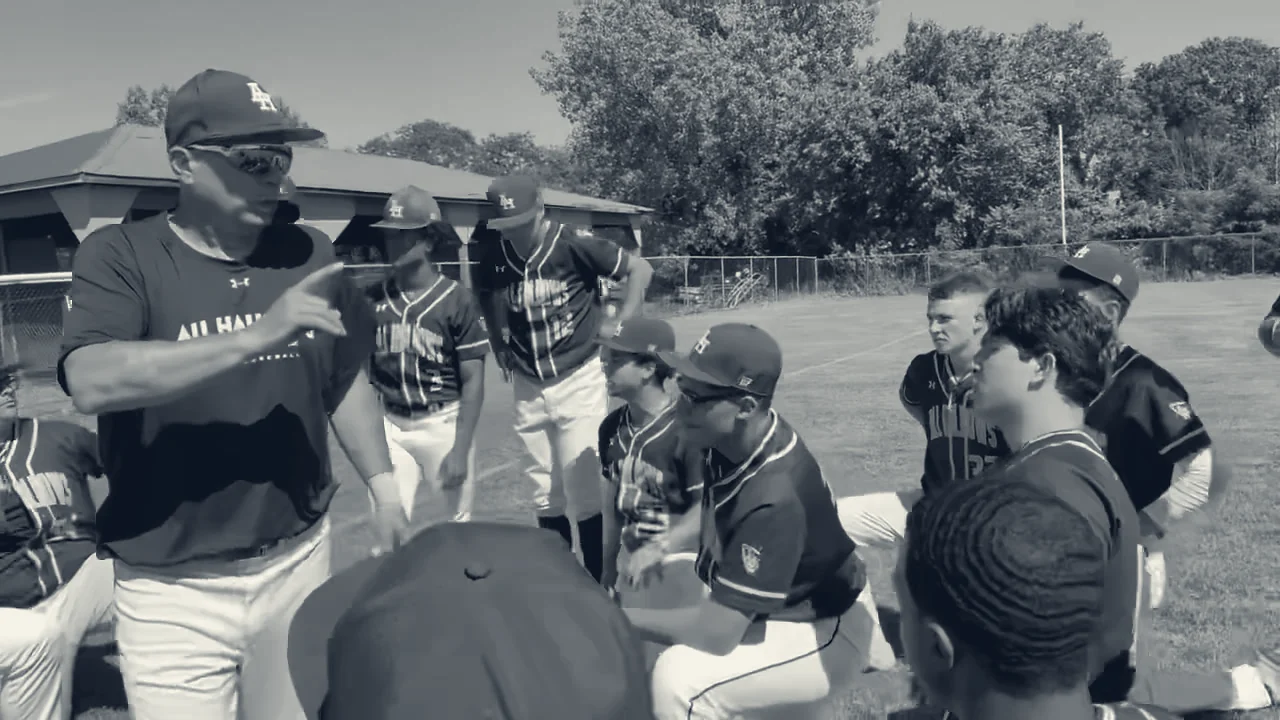
What I look for in players
01Mental and Physical Discipline
The ability to focus, lock in, and understand your responsibilities is essential to becoming a successful baseball player. Discipline allows you to make good decisions on the fly and perform when the game is moving quickly.
You must be mentally prepared and physically committed to your responsibilities.
02Anticipation
Anticipation is the ability to visualize what might happen before it occurs and react accordingly.
In order to anticipate, you must gather information about your opponent that gives you the best possible chance to succeed.
Sometimes that information comes from watching your opponent during pregame or throughout the game.
Things to look for:
- Opponent’s arm strength and throwing accuracy
- Speed and aggressiveness
- Bat speed and hitting discipline
- Defensive positioning and angles
- Opponent’s tendencies
- Situational awareness
The more information you gather, the better prepared you will be to make a decision.
03Instincts
Instincts are directly connected to focus and anticipation.
Being able to make the right play at the right time is not always natural. Good instincts are developed through preparation, experience, and understanding the game.
Knowing the score, number of outs, inning, count, and your opponent’s tendencies gives you an advantage.
The more information you process ahead of time, the better your instincts become.
04Personal Discipline and Commitment
Develop a personal routine. Establish structure in your daily life and be committed to your development.
Make a commitment not only to your team, but also to yourself.
Work hard and don’t fool yourself with fake hustle. Make sure the work you put in is real. Be honest with yourself about your effort, preparation, and commitment.
You must be true to yourself before you can be true to your team.
05Develop Your Principles
Develop principles that you can always turn to, especially during times of adversity.
Your work ethic and the fundamentals you learn throughout your development become the foundation of your game.
Hitting mechanics, fielding mechanics, throwing mechanics, running mechanics, and many other aspects of baseball are principles you develop and continue to refine.
When things aren’t going your way, your principles are what you fall back on.
Trust your preparation. Trust your fundamentals.
06Energy, Attitude, and Passion
I need to see passion and love for the game. I need to see respect for the game.
Young players sometimes get their priorities mixed up during competition. I see players become more concerned with what the other team is saying and doing instead of focusing on their responsibility.
Your task is to do your part in putting your team in the best possible position to win.
- Run hard all the time.
- Play with energy.
- Respect the game, your teammates, your coaches, and your opponents.
- When errors are made, don’t point fingers.
- Help your teammates. Sometimes they need encouragement; sometimes they need correction.
- Remember, no one is trying to make an error.
Playing hard is a choice. Having a good attitude is a choice.
Make the right choice every day.
07Coachable Players
I want players who want to learn and be coached.
Sometimes you may have to be coached hard. That’s part of the process.
I want players who want to earn their spots, embrace the challenge, and understand that hard coaching comes from a desire to help them improve.
Put your ego aside. Listen, learn, and get to work.
08Understand the Correlation Between Baseball and Life
Baseball teaches lessons that extend far beyond the field.
Discipline, respect, passion, responsibility, anticipation, decision-making, principles, compassion, honesty, and love are just a few of the values that connect baseball and life.
The way you approach the game is often a reflection of the way you approach life.
Learn to take responsibility for your actions. Be honest with yourself. Respect others. Be someone your teammates can depend on.
09Passion — Turn It Into Execution
Passion is important, but passion alone is not enough.
Let’s turn passion into execution.
In order to execute, you must be prepared, disciplined, and committed to your responsibilities.
Let your passion show through your preparation, your effort, and your performance.
10Pressure Is a Privilege
Pressure is a privilege.
It creates a sense of urgency and gives you an opportunity to rise to the occasion.
Pressure can help develop a better player when you learn to embrace it rather than run from it.
The game is asking you to perform. Be prepared to answer.
BASEBALL IQ — THE DETAILS THAT MATTER
11Approach to Hitting
Have a plan based on what you see and any additional information you have gathered.
Understand the pitcher, the situation, and what he is trying to do.
Your approach must be purposeful.
Start with the knob down and get on top of the baseball.
Down to up — not up to up.
Be disciplined with your approach. Trust your mechanics and execute.
12Pre-Pitch Defensive Preparation
Before every pitch, get your vision below the zone or even with the zone.
Understand the situation:
- Score
- Number of outs
- Count
- Inning
- Opponent’s tendencies
- Defensive positioning
These details help you make the proper decision before the ball is hit.
Anticipate the possibilities:
- Ball hit to your left
- Ball hit to your right
- Softly hit ball in front of you
- Hard-hit ball directly at you
- Situations requiring a specific throw or decision
Your decision should be made before the ball is hit whenever possible.
Preparation creates confidence. Confidence allows you to react.
13Team Play and Baserunning
Team play is about understanding how to advance runners and create opportunities to score.
Advancing runners with nobody out is always huge.
Going first to third can be a tremendous advantage for your manager. Making proper reads while running the bases is essential.
Baserunning details matter:
- Make good reads on the baseball.
- Understand when to advance and when to hold.
- Get good secondary leads from second and third base.
- Understand your secondary lead from third base when the infield is in.
- Your secondary lead from second base is always important.
- Develop the habit of getting back immediately after your secondary lead if nothing happens after the pitch.
Every decision on the bases can impact the game.
14Communication
There should be constant communication throughout the game.
Communication must take place during live action and during dead-ball situations.
Communicate with your teammates and coaches.
Good communication creates awareness, confidence, and trust.
Be vocal. Be prepared. Help your teammates.
COMMITMENT TO YOUR CRAFT
Your development doesn’t happen by accident. It requires a daily commitment to becoming the best player you can be.
THE BOTTOM LINE
MISTAKES DON’T LOSE GAMES. YOUR RESPONSE DOES!
Baseball is a game of failure, adversity, and constant decision-making.
What separates players is how they prepare, how they respond, and how they continue to compete.
Be disciplined. Be prepared. Be accountable.
Be a great teammate.
And always remember:
The game doesn’t care what you intended to do. It rewards what you execute.
Coach Chuck Gutierrez
Head Varsity Baseball Coach
The Masters School